
Description
How KNOWING Your Intuitive Mind
Can Help You
- Develop a stronger connection with your Intuition and learn how to recognize the many ways intuitive information may come to you.
- Learn to recognize and trust first impressions, hunches, gut feelings, synchronicity, dreams, chance encounters, and other intuitive experiences.
- Explore practical tools including pendulums, subtle-sensing, muscle testing, creative imagination, and dowsing rods.
- Develop greater confidence in your intuitive decision-making abilities for the choices and challenges of everyday life.
- Learn how your conscious and subconscious mind, thoughts, emotions, beliefs, and environment may influence your intuitive awareness.
- Explore techniques for emotional and mental balance, breath work, relaxation, concentration, and expanding intuitive awareness.
- Use your Intuition to explore possibilities and solutions involving self-awareness, health, relationships, family, pets, money, career, business, location decisions—and much more.
- Move beyond simply wondering whether you’re intuitive and begin consciously developing, utilizing, and trusting your intuitive abilities.
Discover the Wisdom of
Your Intuitive Mind
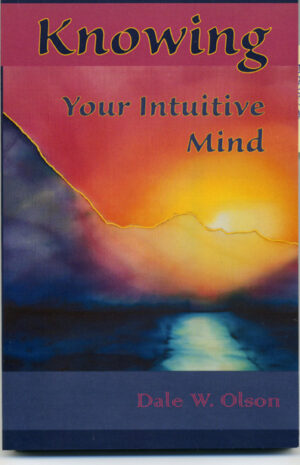
KNOWING Your Intuitive Mind by Dale W. Olson is a practical guide to understanding, developing, utilizing, and trusting your Intuition.
Your Intuition can communicate in many different ways. A first impression, hunch, gut feeling, dream, synchronicity, chance encounter, subtle feeling, or sudden inspiration may provide information that your rational-conscious mind has not yet recognized.
This book helps you become more aware of those intuitive communications while developing practical skills and tools for exploring intuitive answers and solutions in everyday life.
Activate Your Intuitive Abilities
Intuition isn’t limited to one particular technique. KNOWING Your Intuitive Mind explores a wide range of intuitive abilities and methods that can help you discover which forms of intuitive communication work most naturally for you.
First Impressions • Hunches • Gut Feelings • Synchronicity
Pendulums • Chance Encounters • Dreams • Subtle-Sensing
Muscle Testing • Creative Imagination • Dowsing Rods
Through awareness and continued practice, you can learn to recognize intuitive information more clearly and develop greater confidence in using it.
What Is Intuitive Decision Making?
Intuitive decision making involves learning to recognize and consider the information coming from within you—not relying solely upon logic, habitual thinking, emotional reactions, or external information.
Those inner signals may appear as a hunch, gut feeling, first impression, inspiration, dream, synchronicity, or a subtle sense of knowing.
The goal is not to abandon rational thinking. It is to expand the information available to you by developing a stronger working relationship between your conscious mind and your Intuition.
Develop Your Intuitive Decision-Making Skills
As you become more aware of how your Intuition communicates, you can begin applying those skills to the choices, questions, and challenges that arise throughout your life.
Explore intuitive possibilities involving self-awareness, health and well-being, love, relationships, family, pets, money and finances, career, business, location decisions, personal growth—and much more.
Intuitive development is a skill. Like any skill, it becomes more useful through attention, practice, patience, persistence, and trust.
Tools for Knowing Your Intuitive Mind
Beyond recognizing your natural hunches, first impressions, dreams, synchronicities, and chance encounters, this book explores practical intuitive tools including subtle-sensing, muscle testing, pendulums, creative imagination, and dowsing rods.
You’ll also explore the influence of the conscious and subconscious mind, emotional and mental balance, breath techniques, intuitive inhibitors, creative imagination, pendulum applications, dowsing rods, muscle testing, and practical methods for expanding your intuitive awareness.
The purpose is not to make you dependent upon a particular intuitive tool. The tools provide different ways to practice listening, sensing, questioning, exploring, and ultimately developing greater trust in your own Intuitive Mind.


KNOWING Your Intuitive Mind
Allow your Intuition to bring forth intuitive answers and solutions
to help you make better choices and decisions for the
Body, Mind, Heart, and Spirit.
Table of Contents
Introduction
Understanding Your Intuition
Hunches • Inspirations • Communications • Children • Animals
Mind • Words • Thoughts • Environment
Solitude • Practice • Deep Relaxation & Meditation
Natural Setting • Music • Desire to Know
Expanded Communications • Release/Neutralize Negative Imprints
Development of the Intuition
First Impressions
Hunches
Gut-Feelings
Synchronicity
Chance Encounters
Dreams
Subtle-Sensing
Pendulums
Muscle-Testing (Biokinesiology)
Creative Imagination
Dowsing Rods
Chapter 1 — Knowingness
Knowingness (pg.11)
Intuitive Categories • Source of the Intuition
The Eight Elements of the Intuition (pg.12)
Chapter 2 — How Intuition Works
Resistance to Development (pg.15)
Past Research • Technology • Subjective & Objective Testing
Knowing When It’s Your Intuitive Mind (pg.18)
Gut Feelings • Chance Encounters • Synchronicity
Chapter 3 — Energy, the Brain & the Intuition
Energy—the Source (pg.25)
Primary • Innate Intelligence
Where the Intuition Resides: The Brain (pg.27)
Intention • Concentration • Intuition Software • Non-Verbal Communication
Communication’s Site (pg.31)
Right and Left Brain • Focused Attention
Chapter 4 — Developing the Intuition
Conscious-Subconscious Mind (pg.35)
Thought-Form Creation • Subconscious Interface • Origin
Inhibitors and Developers of Awareness (pg.36)
Mind Mastery • Subconscious Influence • Negative/Positive
Positive Subconscious Expansion (pg.39)
Emotions • Habit • Patience • Persistence • Conscious Awareness
What You Think • Speak • Affirmations
Chapter 5 — Emotional and Mental Balance
Emotional and Mental Balance (pg.45)
Filters
Intellect-Ego (pg.45)
Intuitive Inhibitor • No Doubt
Creative Imagination with Emotions (pg.48)
Imagery Mixed with Emotions • Trust/Faith
The Seven Major Negative Emotions (pg.50)
The Seven Major Positive Emotions (pg.50)
Energize Your Intuitive Mind for Creative Effort (pg.51)
Stress • Tension • Environment Setting • Questions • Clear/Specific
Chapter 6 — Mastery of the Breath
Mastery of the Breath (pg.57)
Centering • Emotional-Mental Balance • Cleansing
Micro-Breath Technique (pg.61)
Opening All Channels • Protection
Pulsed Breath (pg.63)
Clearing and Balancing Breath Technique (pg.64)
Chapter 7 — Tools for Knowing Your Intuitive Mind
Tools for Knowing Your Intuitive Mind (pg.65)
Dreams (pg.66)
Recording Your Dreams (pg.69)
Interpreting Your Dreams (pg.71)
Directing Your Dreams (pg.73)
Creative Imagination (pg.75)
Day Dreaming • Reality • Visualization • Limitation
Synthetic/Creative Imagination (pg.78)
Knowledge • Invention • Genius
Consciously Using Your Creative Imagination (pg.80)
First Impressions
Creative Imagination Technique (pg.80)
Secrets of Effective Prayer (pg.82)
Subtle-Sensing Technique • Feel Beyond
Three Steps Beyond With Subtle Sensing (pg.84)
First Impressions (pg.86)
Beyond Your Feeling Hands (pg.87)
Knowing How to Feel Everything
Three Card Subtle-Sensing Technique (pg.93)
Chapter 8 — The Science and the Art of the Pendulum
The Science and the Art of the Pendulum (pg.95)
The Pendulum (pg.96)
Your Approach to the Pendulum (pg.97)
Pendulum Language (pg.99)
Pendulum Language with Checking Objects (pg.103)
Effective Pendulum Use (pg.104)
Accuracy Deterrents • Objectivity • Communications
Ways to Use the Pendulum (pg.107)
Self Test • Accuracy Test • Sensitivity Test
Pendulum Applications (pg.109)
Water • Food • Time & Quantity • Body Analysis • Fertility Cycle
Chapter 9 — Using Dowsing Rods
Using Dowsing Rods (pg.125)
Component Parts • Measuring
Dowsing Rod Instructions (pg.127)
Prerequisites • Movement • Breath • Response
The Subdivision Dowsing Technique (pg.131)
L-Rod Applications Find (pg.133)
Power • Water • Gas Lines • Gold • Detecting Harmful Radiations
Auric Field Reading (pg.139)
Food & Substance Test (pg.142)
Chakra Reading (pg.143)
Chakra & Mirrors — Measuring Yourself (pg.147)
Chapter 10 — Muscle Testing: Applied Biokinesiology
Muscle Testing: Applied Biokinesiology (pg.149)
Instruction (pg.152)
Witness Area (pg.156)
What Can Effect Your Test Results (pg.158)
Muscle Testing Guidelines (pg.159)
Chapter 11 — Get Intuit
Get Intuit (pg.161)
Change Process • Choices
Keys to Expanding the Intuition (pg.162)
Attention • Intention • Trust • Practice • Persistence • Belief
The Eight Elements of the Intuition (pg.163)
Creator of Change (pg.163)
Problem Solving • Strategies • Growing • Learning • Celebration
Genius Capacity (pg.165)
Calm • Confident • Expectant Faith • Concentrated Single Minded
And Much, Much More!
KNOWING Your Intuitive Mind
180 Pages • Perfect Bound • Soft Cover
Size: 8.5 × 5.625 × 0.625 inches
Weight: 8.7 oz
Meet the Author
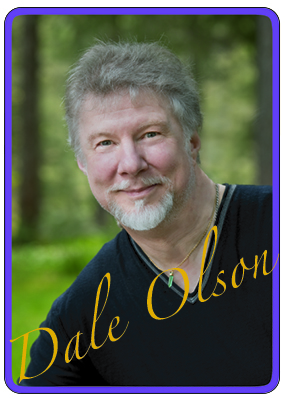
Dale W. Olson
Dale W. Olson has devoted over 40 years to researching, developing, using, and teaching pendulum dowsing and intuitive awareness. His work is dedicated to helping people discover the wisdom, guidance, and answers already available through their own Intuition.
Through decades of exploration, Dale developed practical methods and intuitive tools designed to help people recognize intuitive communication, ask clearer questions, explore possibilities they may not otherwise have considered, and develop greater confidence in their own intuitive knowing.
His approach is practical and empowering: intuitive tools are not intended to replace your own wisdom or decision making. Instead, they can help you develop greater awareness and create a clearer bridge between your conscious mind and your Intuition.
KNOWING Your Intuitive Mind
180 Pages • Perfect Bound • Soft Cover
Size: 8.5 × 5.625 × 0.625 inches
Weight: 8.7 oz
Continue Your Intuitive Journey
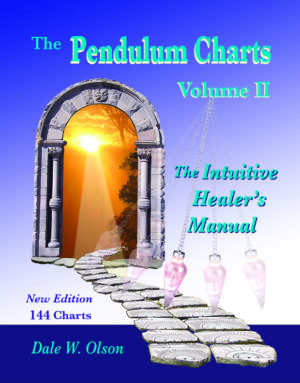
Explore more of Dale W. Olson’s books, pendulum charts, and intuitive learning resources as you continue developing your connection with your Intuition.
Blessings of expanded: insight,
consciousness, inspiration,
Love, and total well-being.
Dale W. Olson

Reviews
There are no reviews yet.